AI4SE & SE4AI Workshop 2026

Sep 22-23, 2026 Washington, DC

The Systems Engineering Research Center and the U.S. Army DEVCOM Armaments Center are pleased to offer the seventh annual AI4SE & SE4AI Research and Application Workshop, planned for September 22–23 and hosted by The George Washington University Trustworthy AI Initiative in Washington, DC.

Registration options for in-person and virtual attendance each include ticket selections for professionals and students.

In-Person Attendance Virtual Attendance

*****NOTICE: Non-U.S. citizens attending either in-person or virtually must submit security documentation ASAP before the workshop to gain clearance to attend. U.S. citizens may be asked to provide documentation certifying their status.*****


Submit Non-U.S. Citizen Documentation

Workshop Theme

This year’s conference theme – “Speed and Innovation through AI4SE & SE4AI” – aims to emphasize the importance of sound systems engineering to both deliver mission capabilities quickly and effectively and transform enterprises to leverage the power of AI. As in the past, the workshop will be organized around SE4AI and AI4SE.

The SE4AI track focuses on leveraging systems engineering principles and methodologies to develop safe, robust, and efficient AI systems that augment operational capabilities, while extending and advancing these principles and methodologies in response to the nature of AI-enabled systems.

The AI4SE track delves into the application of AI in support of the acquisition process by enabling enhanced decision-making, optimization, validation, and verification, and alleviating mundane tasks.

See Previous Workshops

Keynote Speakers
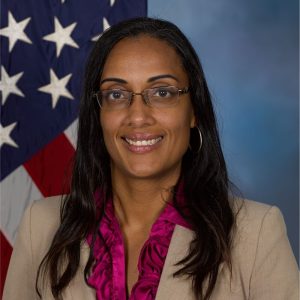
Ms. Rocio (Rosie) Bauer

Assistant Deputy, Acquisition and Systems Management (Data, Engineering & Software), Office of the Assistant Secretary of the Army (Acquisition, Logistics and Technology)

Biography


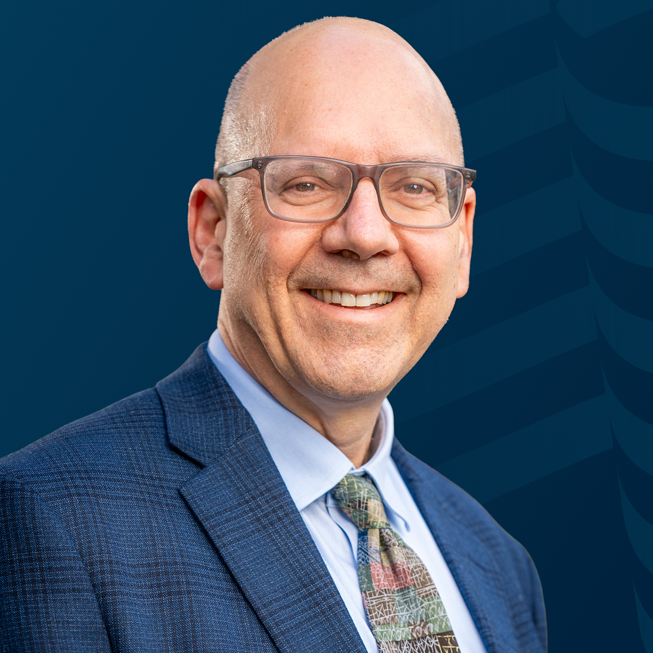
Dr. Tara Sinclair

Professor and Chair of the Department of Economics, The George Washington University

Biography

Share

LinkedIn Facebook

Agenda: September 22

Registration and Networking

8:00 am - 9:00 am

Welcome Remarks

9:00 am - 9:15 am

  • Edward Balleisen, Provost and Executive Vice President for Academic Affairs, The George Washington University

Keynote Address

9:15 am - 10:15 am

  • Rocio Bauer, Assistant Deputy, Acquisition and Systems Management (Data, Engineering & Software), Office of the Assistant Secretary of the Army (Acquisition, Logistics and Technology)

SERC Perspective

10:15 am - 10:45 am

  • Tom McDermott, Chief Technical Officer, Systems Engineering Research Center

Followed by a networking break from 10:45 am – 11:00 am

Technical Presentations: Enterprise-level AI

11:00 am - 12:35 pm

  • Case Study: Speed and Innovation Through Spec-Driven Development: Building an Agentic ISO 15288 Platform at Lockheed Martin, Melissa Bradshaw, Lockheed Martin
  • Swarm-Engineered Ontologies for Systems Engineering: A Multi-Agent Pipeline Across SE Knowledge-Engineering Projects, Paul Wach and Joe Gregory, University of Arizona
  • Workflow Architecture: A New Construct in the Age of AI-enabled Systems, Bryce Huffman, The George Washington University 
  • Mediagents: Leveraging System of Systems Engineering Mediators to Inhibit Unwanted Emergent Behavior in AI Pipelines, Luke Douglas, The George Washington University
  • From Autonomous Agents to Agentic Enterprises: A Systems Engineering Framework for Trust, Governance and Progressive Assurance, Carlo Lipizzi, Stevens Institute of Technology
  • Insight Session: Automating Systems Simulation at Scale: An LLM Pipeline for Multi-Framework Modeling, Raz Saremi, Stevens Institute of Technology

Technical Presentations: Testbeds and Training

11:00 am - 12:35 pm

  • Case Study: Enhancing Risk-Informed Decision Making Through LLM-Based Concern Analysis in the Human Landing System Program, Nipa Phojanamongkolkij, National Aeronautics and Space Administration
  • Establishing a Learned Operational Reference Environment (LORE): A Knowledge Repository and Process Improvement Testbed Using GenAI.mil, Allison Ledford, Auburn University
  • Simulating Stakeholder Engagement: A Virtual Human Approach to Upskilling the Systems Engineering Workforce, Bryant Baldwin and Neel Parekh, University of South Alabama and University of Florida
  • The MESH Environment: Multi-level Evaluation of Sociotechnical HAI-workflows, Zoe Szajnfarber, The George Washington University
  • STOIC Road to a Hive Operating System: ZynWorld as the Operational Testbed, Paul Wach, University of Arizona
  • Insight Session: Speed and Innovation in AI4SE: Using an LLM-Enabled Virtual Systems Engineering Workshop to Architect a Complex Testbed in One Day, Keith Godwin, Torch Technologies

Technical Presentations: Cognititve Assistants for Mission Engineering and Digital Engineering

11:00 am - 12:35 pm

  • Case Study: Risk Trace: Human-in-the-Loop AI for Requirements-to-Risk-Control Traceability in Medical Device Systems Engineering, Esteban Solorzano Zeledon, Boston Scientific
  • A Digital Engineering Ecosystem Chatbot based on Semantically Rich Knowledge Graphs, Thomas Hagedorn, Systems Engineering Research Center
  • AI-Enabled Mission Engineering, Michael Pennock, MITRE
  • AI Cognitive Assistant for Traceable Interaction with MBSE Behavior Models, Lance Sherry, George Mason University
  • Learning for Mission Resilience: A Digital Engineering Framework for Intelligent System-of-Systems Coordination, Taylan Topcu, Virginia Tech
  • Insight Session: Human-AI Workflows for MBSE Translation, John Materum, Nick Noonan and David Ruddell, David Ruddell Sandia National Laboratories

Lunch

12:35 pm - 1:35 pm

Cross-Industry Panel

1:35 pm - 2:45 pm

  • Mary Chasko, Chief Medical Information Officer, Mid-Atlantic Permanente Medical Group
  • Melissa Koide, Chief Executive Officer and Director, FinRegLab
  • Amanda Muller, Northrop Grumman and Mission Systems AI Lead, Northrop Grumman
  • Moderator: Zoe Szajnfarber, Chief Scientist, Systems Engineering Research Center 

Followed by a networking break from 2:45 pm – 2:55 pm

Technical Presentation: Delegation and Reliance in Agentic Systems

2:55 pm - 4:30 pm

  • Case Study: Assessing Consistency with the AI Ethical Principles, Benjamin Werner, Army DEVCOM Armaments Center
  • Oversight Coupling and Appropriate Reliance in Agentic AI Systems, Sarah Starr, The George Washington University
  • Beyond Adoption: How Adaptive AI Feedback Shapes Trust and Design Improvement, Ting Liao, Stevens Institute of Technology
  • Contract-Based Agentic Systems Engineering: Delegation as Quotient for Trusted Cyber-Physical System Design, Ryan Matheu, University of Maryland
  • Accounting for Uncertainty in Safety & Reliability of AI-enabled Systems, Lance Sherry, George Mason University
  • Insight Session: The Vibe Coding Epidemic and Spec Driven Development As a Remedy, Melissa Bradshaw, Lockheed Martin

Technical Presentations: Mitigating Errors

2:55 pm - 4:30 pm

  • Case Study: AI Circuite Breaker, Paul Wach, University of Arizona
  • AI as the Semantic Bridge in the Model-Based Quality Digital Thread, Priya Sukumaran, Boeing
  • Privacy-aware Multi-Agents for System of Systems, Nil Hande Ergin, Pennsylvania State University
  • Understanding Human-AI Interactions in Complex AI-Driven Autonomous Systems: Implications of Trust, Interpretability, and Ethical Reliability in Critical Missions, Bryan Mesmer, The University of Alabama in Huntsville
  • Common-Cause Analysis of Fault Trees with AI-Based Systems, John Shortle, George Mason University

Technical Presentations: Applications

2:55 pm - 4:30 pm

  • Case Study: Field Level Maintenance Archietecture (FLMA): A Lifecycle Systems Engineering Framework for AI-Enabled Army Field Maintenance, James Parham, Army Strong PM Consultants
  • AI-Enabled Modeling and Simulation for Airspace Safety Analysis: A Digital Framework for Synthetic Flight Track Generation, Validation, and Collision Risk Assessment, Shahab Aref, George Mason University
  • From AI Tools to AI Teammates: Situating and Evaluating Scheduling Capability for Small and Medium-Sized Manufacturers, Peter Denno, National Institute of Standards and Technology
  • Does One Model Fit All? Personalized vs. Generalized Machine Learning Models for Workload Prediction in Human-in-the-Loop Systems, Md Doulotuzzaman Xames, Virginia Tech
  • Reinforcement Learning for Autonomous Equipment Optimization via Digital Twins: A Comprehensive Framework for Industry 4.0, Priya Sukumaran, Boeing
  • Insight Session: CRISP: A Systems Design Thinking Approach for Prompt Engineering, Robert Riley, Air Force Research Laboratory

Demo & Poster Exposition

4:30 pm - 6:00 pm

Demo Sessions

  • Assistive and Agentic AI for Git-Native SysML v2 Modeling with SysGit, Charles “Zeke” Brechtel, SysGit
  • Integrating AI4SE Methods to Enhance Synthesis of System Architectures, Eric Dano, The George Washington University
  • insightLM: An MCP-Native Desktop Workbench for LLM-Assisted Systems Engineering, John DeHart, Avian
  • Looking Glass: the Key to Digital Transformation, Isaac Gang, George Mason University
  • AIR Tool: An Automated Causal Discovery and Inference Pipeline for Software Analytics, Linda Parker Gates, Carnegie Mellon University Software Engineering Institute
  • Davinci: Live Demonstration of Agentic AI Operating Directly on a Systems Engineering Knowledge Graph, Chris Helmerich, Celedon Solutions
  • AEGIS: A Prototype Environment for Turning Structurally Opaque Systems of Systems into Computable Governability, Mohamed Mogahed, Stevens Institute of Technology
  • GenGroves: An AI Copilot That Lowers the Barrier to SysML v2 and Digital Engineering, Mary Nerayo, Virginia Tech National Security Institute
  • AI-Native MBSE Platform for Accelerating Systems Engineering Workflows with SysMLv2, Sebastian Völkl, Dalus

Poster Presentations

  • A Mechanistic Digital Twin for Predicting Physiological and Cognitive Performance to Support Operational Decision-Making, Oyshik Bhowmik, George Mason University
  • Systems Engineering for Trustworthy Embedded AI in Autonomous Systems of Systems: A Resilient-by-Design Architecture for Contested Environments, Jaewon Kim, Texas A&M University
  • The Important Role of “Context” in the Practical Design and Operation of Systems that Mix Human and Artificial Intelligence, Lance Sherry, George Mason University
  • Digital Twins for AI/ML Training and Testing: A Systematic Review, Ana Wooley, The University of Alabama in Huntsville

Networking Reception

6:00 pm - 8:00 pm

Agenda: September 23

Registration and Networking

8:00 am - 9:00 am

Keynote Address

9:00 am - 10:00 am

  • Tara Sinclair, Professor and Chair of the Department of Economics, The George Washington University

Army DEVCOM Armaments Center Perspective

10:00 am - 10:30 am

  • Cynthia Perazzo, SES, Executive Director, Enterprise & Systems Integration Center, Army DEVCOM Armaments Center

Followed by a networking break from 10:30 am – 10:45 am

Technical Presentations: The Governance Challenge

10:45 am - 12:20 pm

  • Case Study: Understanding Department of War Responsible AI Needs & Requirements: An examination of DoW’s AI Ethics, Policies, and Directives for the Safe, Secure, and Trustworthy Adoption of AI-Enabled Systems, Logan Mailloux and Vincent Santore, Lockheed Martin
  • What is Different About AI? Understanding the Nature of Risk for Stronger Operational Capability, Valerie Sitterle, Systems Engineering Research Center
  • Why AI Risk Frameworks Are Hard to Adopt: A NIST AI RMF Stress Test of Governance Translation in AI-Enabled Decision Systems, Joseph Simons, The George Washington University
  • Demonstrating Justified Confidence in Autonomous Weapon Systems for DoD Directive 3000.09 Approvals, Benjamin Schumeg, Army DEVCOM Armaments Center
  • Beyond the Model: A Layer-by-Layer Map of AI Governance Mechanisms, Inducted from Safety-Critical Domains (Aviation, Pharmaceuticals, Food Safety), Zoe Szajnfarber, The George Washington University
  • Insight Session: Systems Architecture Modeling for Human-AI Intensive Systems, Heidi Perry, Massachusetts Institute of Technology Lincoln Laboratory

Technical Presentations: T&E of LLMs and Agents

10:45 am - 12:20 pm

  • Case Study: MLQP Card Wizard: Guided Qualification Cards for ML Dataset and Model TEVV, Haley Green, ARiA
  • From Data-to-Model to Model-to-Model: Systems Engineering and T&E Velocity in the Era of Foundation-Model-Based AI, Tyler Cody, University of Virginia
  • Evaluating Methods to Generate Mission-Relevant Small Language Models, Emma Meno, Virginia Tech National Security Institute
  • Metadata-Driven Test and Evaluation of LLM Agents, Nil Hande Ergin, Pennsylvania State University
  • Mission-Aligned Large Language Models, Ethan Thorley, United States Military Academy
  • Insight Session: Native AI Integration For Model-Based Systems Engineering: Lessons Learned from an LSP and Knowledge-grounded Experimentation Platform, Colin Dempsey, Carnegie Mellon University Software Engineering Institute

Technical Presentations: Extracting Information

10:45 am - 12:20 pm

  • Case Study: AI-Assisted Transformation of Operational Recordings into Reviewable Evidence, Robert DeMarco, Army DEVCOM Armaments Center
  • Dependency Graph Topology and Classical Compressibility Diagnostics for AI Value in Systems Engineering Models, Bob Hill, The George Washington University
  • An AI Based Sectionalized Semantic Traceability Framework for Policy Documents with Applications to Department of Defense Problems, Jose Ramirez Marquez, Stevens Institute of Technology
  • Assessing the Impact of AI-Based Summarization on Information Relevance and Engagement, Donald Koban, United States Military Academy
  • Data Interoperability Foundations for Being AI-Ready, Valerie Sitterle, Systems Engineering Research Center
  • Insight Session: From Structural Opacity to Computable Architectures: Recognizing Emergent Systems of Systems for AI-Assisted Systems Engineering, Mohamed Mogahed, Stevens Institute of Technology

Lunch

12:20 pm - 1:20 pm

Tools Panel

1:20 pm - 2:40 pm

  • Daniel Brookshier, Solutions Architect, Dassault 3DS
  • Chris Helmerich, Chief Technical Officer, Celedon Solutions
  • Dale Ormond, Senior Advisor, Kompozition
  • Benjamin Schumeg, Software Quality Technical Lead, Army DEVCOM Armaments Center  
  • Moderator: Tom McDermott, Chief Technical Officer, Systems Engineering Research Center

Followed by a networking break from 2:40 pm – 2:55 pm

Technical Presentations: AI-assisted SE Requirements Engineering

2:55 pm - 3:30 pm

  • Benchmarking of LLM-Based Requirement Quality Evaluation and a Knowledge-Based Hybrid Prototype for Pushing the Boundary of Trustworthiness, Jannatul Shefa, Virginia Tech
  • Absent by Design: A Review of AI-Assisted Requirements Engineering in ERP Implementations, Navendu Bhatt, Stevens Institute of Technology

Technical Presentations: AI-assisted SE Design

2:55 pm - 3:30 pm

  • Evaluating Engineering Knowledge Leakage in AI-Assisted Systems Engineering Workflows, Yinchien Huang, Purdue University
  • Governing AI-Supported Design and Verification Boundaries in Systems Engineering: A Three-Axis Interpretation of the V-Model, Toshiyasu Watanabe, Waseda University

Technical Presentations: AI-assisted SE Processes

2:55 pm - 3:30 pm

  • Introducing Automation to Reform The Model Change Request Process, Salvatore Latella, Army DEVCOM Armaments Center
  • An Agentic System for Cyber Resilience, Mary Nerayo, Virginia Tech National Security Institute

SE & AI Education for Workforce Readiness

3:30 pm - 4:50 pm

Closing Remarks

4:50 pm - 5:00 pm

Details

Event

AI4SE & SE4AI Workshop 2026

Start Date
September 22
End Date
September 23
Event Link

Venue

The George Washington University

Address
Washington, DC 20052

Organizer

Systems Engineering Research Center (SERC)

Email
serc@sercuarc.org
Website
http://www.sercuarc.org/